

Updates
Racing Mechanics Aug 30, 2025
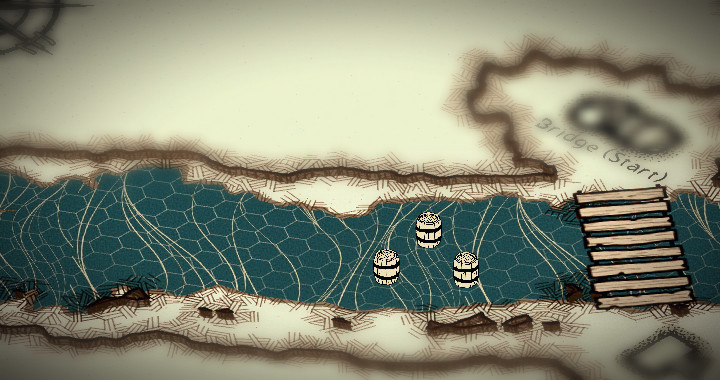
I've written a part of a quest where characters have to do some barrel racing down an underwater river. I did this without actually knowing how I would impliment it, so I've started frantically researching how others have managed racing in tabletop RPGs...
D&D Beyond Forum: Racing Mechanics?
r/DMAcademy: Does anyone know of any good racing mechanics for 5e?
The gist seems to be to use a modified chase mechanics. What are chase mechanics I hear you ask? Well, I've no idea. Never chased or been chased in a desktop roleplaying session. Or if I have I've done it without knowing and probably performed very poorly.
Anyway...
D&D Beyond: Dungeon Master's Guide - Running the Chase (Paywalled)
Awesome Dice: DND 5e Chase Rules: How to Have Exciting Chase Scenes
Dungeon Master Assistance: D&D 5E – Quick Reference – Chase Rules
Hipsters & Dragons: How To Run a Chase in 5e D&D…. Step by Step Rules!
From what I've discovered the standard chase rules in D&D are considered to be quite dull and people usually have to improvise to make it interesting.
I didn't feel any of the suggestions fit my situation, which is not a chase, but a race. So I've chucked something together. It may or may not need more work.
So here goes:
Introduction
Characters are racing down a river current, in barrels. they have a plank to use as an oar. They are in barrels. This is not going to be The Fast & The Furious. If it's not going to be thrilling, then it has to be at least fun. Barrels aren't going to be very manouverable. Players can maybe adjust their bodyweight to direct the barrel somewhat. They can use the "oar" to help manouver or speed up. As they are up against goblins I'd expect the rules of the race to be minimal, and use of oars to push an opponents barrel could be an option.
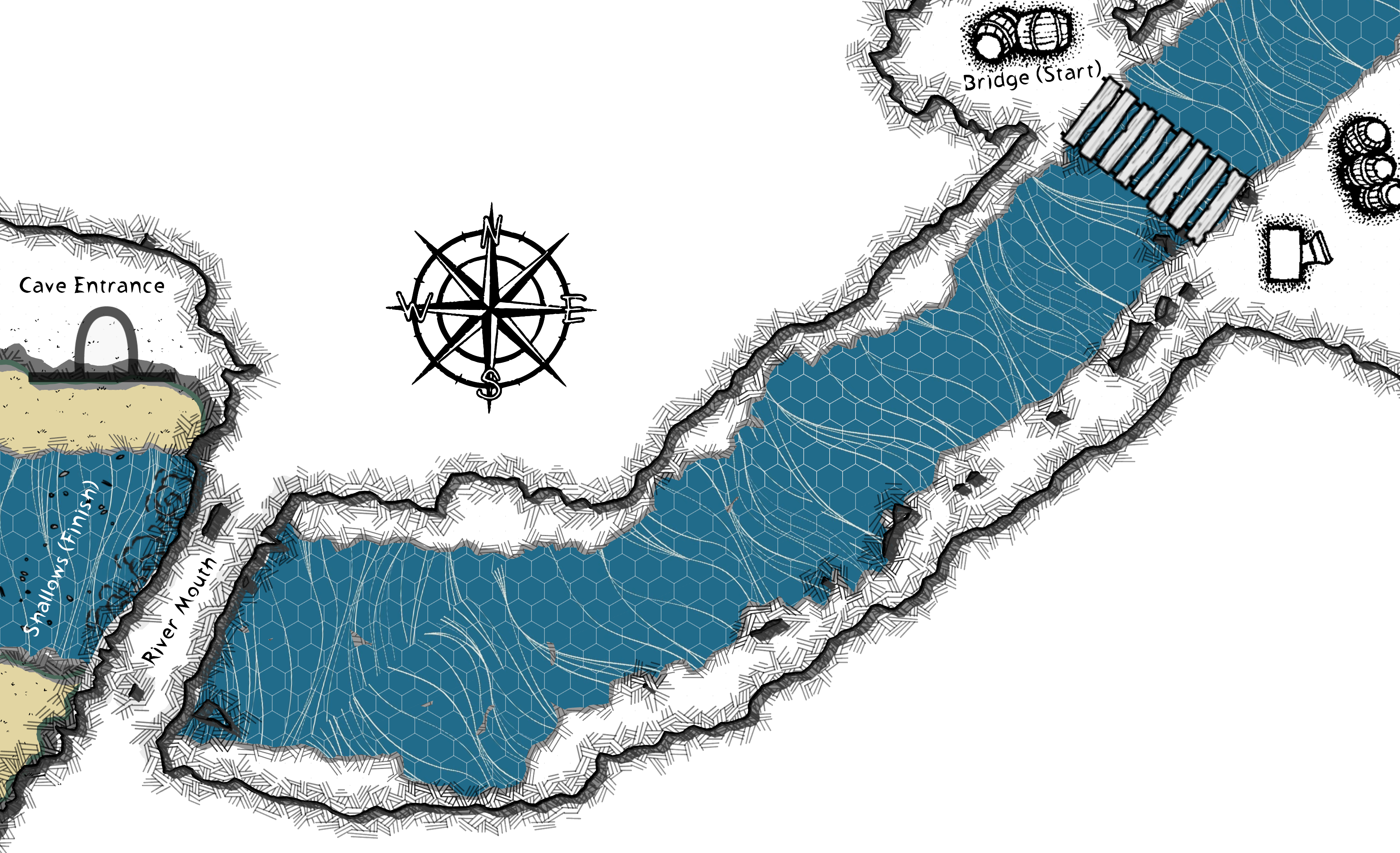
The race will be short, given the length of the river between the starting point (a makeshift bridge near the back of the cave) and the end point (the shallows at the opening to the cave outside). This also stops it getting too tedious. I was thinking perhaps three or four rounds.
Game Map
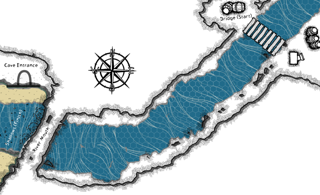
The map is divided into hexagons for this. Each hexagon is about five feet. The river itself is Approx 6x50.
Movement
First the players (and the DM, if any NPCs are involved) make the standard initiative rolls to determine who goes first.
Each player rolls a D6. This is how many hexagons they can move. The DM makes a secret D6 roll on behalf of the river for each player.
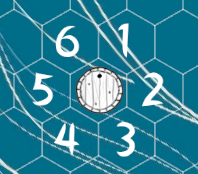
The players then moves their barrels. The DM looks up the river flow and eddies table, this will determine how the river affects each player's move. The DM will then change their final position accordingly. The rolls corrispond to the sides of the finishing hex clockwise from north.
Flow & Eddies Table
| Dice roll | Barrel adjustment |
|---|---|
| 1 | move barrel to the top right hex |
| 2 | move barrel to the middle right hex |
| 3 | move barrel to bottom right hex |
| 4 | move barrel to bottom left hex |
| 5 | move barrel to middle left hex |
| 6 | move barrel to top left hex |
Collisions
Any barrels that collide with each other or hit the bank need to make a dex check or go back one hex roll on the table again; This may well result in multiple rolls on the table and the barrels bouncing all over the place. This is quite chaotic, but intentional as it fits the mood of the race...
Oarsmanship
On each turn after the "river" move, a player who has can quickly decide to use their oar to avoid the consequences or advance one more hex. They will need to clearly state which outcome they desire. They will need to perform a strength check. If they succeed they will either advance or remain where they intended depending on what they announced they wanted to achieve with the oar. A failure means they remain where they are after the river move and are unable to use the oar again on the following turn. If the river move would cause a collision and they announce they will try to advance, the the strength check is made at a disadvantage. A failure that results in a collision means they go back one hex roll again and cannot use the oar again for the next turn.
Critical Failures
Any dex check that is a critial failure means the barrel capsizes and the player goes back one hex rolls again and when they finally stop they miss the next turn while they get back on the barrel.
Any strength check that rolls a critical failure, loses their oar and has the option to either continue without it or retrive it, which has the same penalty as a critical dex failure.
Agressive Behaviour
Of course, players can attempt to deliberately ram another players barrel, this will be treated as a standard collision except the "rammer" rolls with advantage. Depending on the setting, the rammer may be penalised or disqualified, however as this particular race is run by goblins penalties for cheating will not apply.
Ending the Race
The winner is the first person to get to the finish line, which in this case are the shallows beyond the cave river exit.
I've not been able to test this yet, so it may not work in practice. As with everything else I'd value feedback and suggestions...